April 22, 2026 · Updated October 2026
Therapy in Los Angeles Covered by Cigna, Aetna, and Blue Shield
Quick Answer
How do I find therapy in Los Angeles with Cigna, Aetna, or Blue Shield?
Los Angeles has many in-network Cigna, Aetna, and Blue Shield therapists, but wait times in popular practice areas can run 4-12 weeks. The fastest path is through a group practice that handles credentialing and intake centrally, or via telehealth where you can see any California-licensed therapist statewide. Lean Medical matches LA patients with in-network therapists across both payers.
Have Cigna? See in-network therapists accepting new patients
Los Angeles has no shortage of therapists on paper. Between Westside private practices, Koreatown group clinics, and the directories Psychology Today fills up with every month, a quick search can surface a few hundred names in under a minute. The harder question is which of those therapists actually accept your insurance, have openings, and can start within the next few weeks rather than the next few months.
If you carry Cigna, Aetna, or Blue Shield - two of the most common commercial plans in LA County - your options change. You can stay in-network, keep your costs predictable, and skip the out-of-pocket bills that come with private-pay therapy. You can also see a California-licensed therapist by video from anywhere in the state, which matters in a city where a 10-mile drive can turn into a 90-minute errand.
This guide walks through the real landscape of finding therapy in Los Angeles, how telehealth changes what is possible, and what to look for if you have Cigna, Aetna, or Blue Shield coverage.
Finding Therapy in Los Angeles: The Real Landscape
LA County is home to roughly 10 million people and thousands of licensed mental health clinicians. You can find therapists concentrated in Santa Monica, Beverly Hills, Pasadena, Silver Lake, Culver City, and Long Beach, with smaller clusters in the Valley and in South Bay cities like Torrance and Manhattan Beach. On paper, that sounds like abundance.
In practice, most patients hit the same wall. A large share of LA therapists do not accept insurance at all and operate fully on a cash-pay or sliding-scale basis, typically $175 to $300 per 50-minute session. Many of those who do accept insurance have waitlists of four to eight weeks, especially in high-demand neighborhoods on the Westside and in East LA. Directories often show outdated information, and a therapist listed as "accepting new patients" may have been full for months.
If you have Cigna, Aetna, or Blue Shield, the in-network path is usually the fastest route to care and keeps costs predictable. An in-network therapy session with either plan typically ranges from $20 to $50 as a copay, or coinsurance once your deductible is met. Compared to $200 out of pocket for a private-pay session in Brentwood, the math does most of the convincing.
What Makes Finding Care in LA Different
Every metro has its quirks, but a few things make the LA search different from other California cities.
- Geography is the search. LA is not really one city - it is a grid of neighborhoods separated by freeways and traffic. A therapist in Culver City is technically 15 miles from Pasadena, but at 5:30 p.m. on a Tuesday that is a real 75-minute drive. Many patients filter by neighborhood first and clinician fit second, which narrows the options before credentials or specialty ever enter the picture. See our Los Angeles service area page for the neighborhoods we cover and how matching works. The same neighborhood-first pattern shows up next door in Orange County behavioral health, where the polycentric layout from Huntington Beach to San Clemente forces the same compromises - our Orange County service area page has the county workforce numbers behind that.
- The industry mix. LA has a heavy concentration of therapists who specialize in creative-industry clients, executives, and performers. Rates run high in those niches, and many clinicians have moved fully cash-pay because their caseloads fill regardless. That squeezes insurance-paying patients into a smaller pool of in-network therapists.
- A strong group-practice presence. LA has more multidisciplinary group practices than most California metros - places that employ several therapists, a psychiatrist or two, and sometimes a psychological testing team under one roof. Group practices are typically faster to match you with a clinician than a solo therapist in private practice, because they can triage across a team.
If you need anxiety or depression support, generalist outpatient therapy is widely available across LA. For more specialized care - psychological testing, psychiatry, or child and adolescent work - the pool shrinks and waits stretch longer.
Telehealth Opens Up the Rest of California
One of the most useful things that changed during the pandemic and stuck around is that any California-licensed therapist can see any California resident by secure video. That means the "local" in local therapy is looser than it used to be. A clinician based in Sacramento, San Diego, or the Bay Area can see you in Los Angeles without either of you ever being in the same room.
For LA specifically, telehealth solves three common problems. It takes traffic out of the schedule, which is often the single biggest reason patients cancel sessions. It widens the pool of in-network therapists beyond whichever Westside or Valley practices happen to be near you. And it makes it easier to find a therapist who matches your background, specialty, or language - a point that bites hardest in neighborhoods where local supply is thin for a given language, like our walkthrough on finding a therapist in Glendale with Cigna, Aetna, or Blue Shield covers for the Armenian-American community - because you are not limited to a 5-mile radius around your home or office.
Cigna, Aetna, and Blue Shield all cover telehealth therapy at the same level as in-person visits in California. Your copay, deductible, and session limits are identical whether you see your therapist at their office in Westwood or by video from your apartment in Echo Park. Medicare and Medi-Cal rules are different, but for commercial Cigna, Aetna, and Blue Shield plans, telehealth parity is well established.
Most patients we work with end up mixing formats - a first session in person if that feels important, then weekly telehealth once the relationship is set. Others go fully virtual from the start. Both work. If you want a deeper look at the coverage side, our Cigna therapy coverage in California and Aetna therapy coverage in California guides walk through the specifics plan by plan.
Using Cigna, Aetna, or Blue Shield for Therapy in Los Angeles
Cigna, Aetna, and Blue Shield are all common employer-sponsored plans in LA. Studios, production companies, hospital systems, universities, and the city and county workforce all lean heavily toward one or both. Federal parity law (the Mental Health Parity and Addiction Equity Act) requires both to cover outpatient therapy at the same level as medical and surgical services, so coverage itself is not the open question - how your specific plan applies it is.
With Cigna, most PPO and Open Access plans let you see any in-network therapist without a referral. HMO plans often do too, though some still route you through a primary care physician. Expect a copay in the $20 to $50 range for an in-network session, or coinsurance after your deductible is met. Learn more on our Cigna benefits page.
With Aetna, PPO and POS plans typically allow self-referral to a behavioral health clinician. HMO plans may require a referral. Cost-sharing is similar to Cigna: a copay of $20 to $50 for in-network visits, or coinsurance after your deductible. For plan-specific details, see our Aetna benefits page.
If you are not sure what your plan covers, the fastest check is to call the member services number on the back of your card and ask about your outpatient behavioral health benefits, whether a referral is required, your copay or coinsurance, and whether telehealth is covered at the same level as in-person. You can also browse our patient services or learn about your Cigna, Aetna, or Blue Shield benefits and ask us to check them for you.
How to Evaluate a Los Angeles Therapist
Once you have a shortlist of in-network therapists who have openings, a short evaluation step saves a lot of time later. Most LA group practices and many solo clinicians offer a brief (15 to 20 minute) intake call before booking a full session. Use it.
A few questions worth asking:
- Are you currently in-network with my specific Cigna, Aetna, or Blue Shield plan, and have you verified my benefits?
- What is your experience with what I am bringing in - anxiety, trauma, relationship work, ADHD, grief, whatever fits?
- What does a typical course of therapy with you look like, and how do we decide when to end?
- Are you available for weekly sessions at a time that works for me, or will I be on a waitlist?
- Do you offer both in-person and telehealth, and can we switch between formats?
Credentials matter but not in the way most people think. A licensed psychologist (PhD, PsyD), LMFT, LCSW, or LPCC can all provide effective outpatient therapy for most common concerns. What matters more is training in an approach that fits your situation (CBT, EMDR, psychodynamic, DBT, and so on) and whether the personal fit feels right in the first couple of sessions.
If the first therapist does not feel right, switching is normal. Our guide on how to know if your child needs a therapist covers how to evaluate a match for a kid, which has its own wrinkles. For adults, a good rule is that you should feel at least slightly better or at least clearer about the work by session three or four. If you are stuck at session six, say so - either the therapist will adjust or you will know it is time to move on.
Clinicians available in Los Angeles
Every clinician below is licensed in California, accepting new patients, and sees patients in Los Angeles by secure video telehealth. None of them has an office in Los Angeles; telehealth is how patients in Los Angeles see them, and Cigna, Aetna, and Blue Shield of California cover it at the same rate as an office visit.

Dr. Alicia Francois
Licensed Clinical Psychologist
Accepting new patients

Dr. Rebecca Gutierrez
Licensed Clinical Psychologist
Accepting new patients
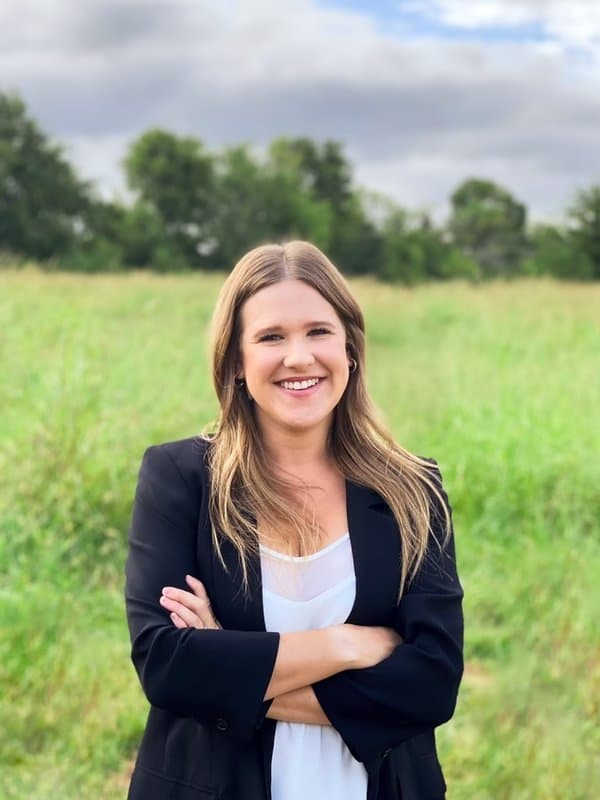
Dr. Joelle Kobliska
Licensed Clinical Psychologist
Accepting new patients

Dr. Mihir Upadhyaya
Psychiatrist
Accepting new patients
Key Takeaways
Key takeaways
- Los Angeles has many in-network Cigna, Aetna, and Blue Shield therapists, but wait times in popular practice areas run 4-12 weeks.
- A group practice that handles credentialing and intake centrally is often the fastest path to a first appointment.
- Telehealth lets you see any California-licensed therapist statewide, which significantly expands LA-area options.
- Federal parity law requires Cigna, Aetna, and Blue Shield to cover therapy at the same level as medical care.
- Verify your specific copay, deductible, and telehealth coverage before scheduling, or work with a practice that verifies for you.
Frequently Asked Questions
Is it hard to find a therapist in Los Angeles?
Finding a name is easy. Finding a therapist who takes your insurance, has openings within a few weeks, and fits what you are looking for is the harder part. Most LA patients find it faster to go through a group practice credentialed with their insurance than to call solo therapists one at a time. Telehealth also widens the pool beyond your immediate neighborhood.
How much does therapy cost in LA with Cigna, Aetna, or Blue Shield?
With an in-network therapist, expect a copay of $20 to $50 per session, or coinsurance after your deductible is met. Exact numbers depend on your specific plan. Private-pay therapy in LA typically runs $175 to $300 per session, which is why staying in-network matters for most people.
Can I see a therapist by video if I live in Los Angeles?
Yes. Any California-licensed therapist can see you by secure video anywhere in California. Cigna, Aetna, and Blue Shield all cover telehealth therapy at the same level as in-person visits. Many LA patients do telehealth for scheduling reasons, since a 15-mile drive in traffic can make weekly sessions hard to keep.
Do I need a referral from my doctor for therapy in LA?
It depends on your plan. Cigna, Aetna, and Blue Shield PPO plans almost never require a referral. HMO plans sometimes do. The fastest way to find out is to call the member services number on the back of your card and ask whether you can self-refer to a behavioral health clinician.
What is the difference between a psychologist, LMFT, LCSW, and LPCC?
All four are licensed to provide outpatient therapy in California. Psychologists (PhD or PsyD) have doctoral training and are the only group that performs most psychological testing. LMFTs, LCSWs, and LPCCs have master's-level training and different specialty emphases - family systems, social context, and counseling respectively - but all provide effective therapy for common outpatient concerns.
Can I switch therapists if the first one isn't the right fit?
Yes, and it is common. The first therapist you see will not always be the right one. If after a few sessions the work feels stuck or the personal fit feels off, say so. A good therapist will either adjust or help you find someone better suited. Switching does not mean starting over - most clinicians can pick up from a summary rather than making you retell everything.
Does Cigna, Aetna, or Blue Shield cover psychological testing in LA?
Yes, both typically cover psychological and neuropsychological testing when clinically indicated, though testing often requires prior authorization. Testing capacity in LA is tighter than general therapy capacity, so expect longer waits to schedule. Our guide on neuropsychological testing walks through what to expect.
Explore more
Therapists serving Los Angeles
Our service area page for LA: how matching works, what's covered, and how to get started.
Get matched with a therapist
Tell us what you are looking for and we will find an in-network therapist who fits.
Are you a clinician in LA?
Join a group practice that handles billing, credentialing, and admin so you can focus on care.